

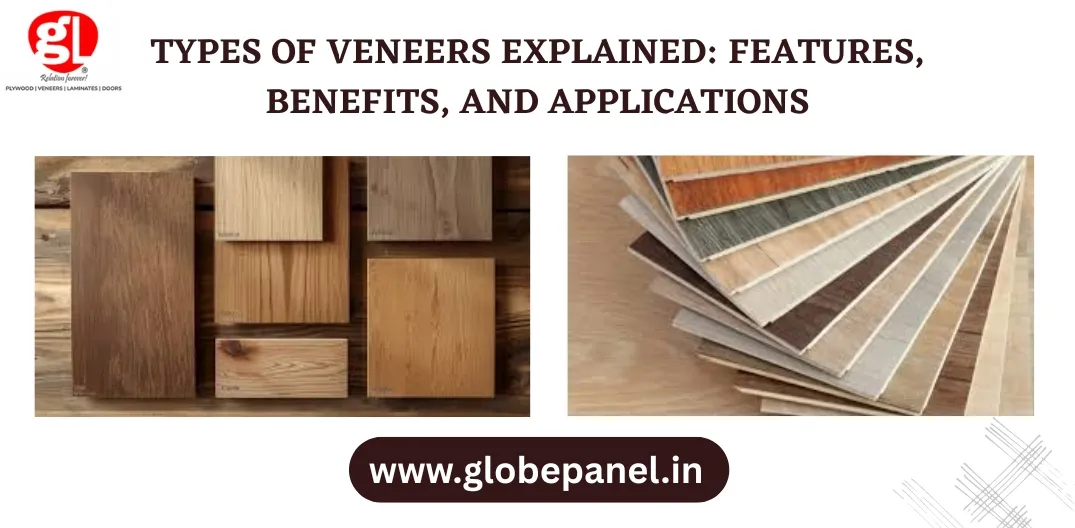
Veneers have been developed to overcome the limitations of solid wood. These are more reliable and stronger compared to laminate or other top-layer materials. They have the rich appearance of wood without the cost borne in sourcing and crafting the timber. In modern woodworks, it has become a usual presence due to its refined qualities at a lower price. Choosing the right kind of veneer matters for each project because it makes or breaks your interior design. Veneer plywood manufacturers use a streamlined sequence of processes, which includes log preparation, steaming, slicing, drying, edge cutting, splicing, pressing and finishing. The variations in these processes form different kinds of veneers.
What is a Veneer?
Veneers are the thin slices of wood sourced from hardwood or softwood trees. This layer is applied on a stable substrate, which can be plywood, particle board or MDF. Being engineered by veneer plywood manufacturers, it has strong material characteristics as well as aesthetic value. Meanwhile, it has a lower weight compared to solid wood.
Types of Veneers
1. Natural Wood Veneer
As their name suggests, natural wood veneers are cut from the real wood logs of trees like teak or walnut. It preserves the true aesthetics of natural wood, like grain pattern, texture, and colour.
2. Reconsituted Veneer (Recon)
The recon veneers are engineered veneers sourced from fast-growing wood species like poplar. These are dyed, layered and re-sliced to mimic the stunning look of real wood. These have enhanced properties over those of real wood.
Other Types You May Come Across
While natural and recon veneers are highly used in interiors, there are other types also available in the market:
● Engineered Veneer: These are made for large surfaces where repeatable patterns are required.
● Paper Back Veneer: A paper layer is added to this veneer, which is used on curved surfaces.
● Phenolic- Backed Veneer: Used in applications where a higher degree of moisture resistance is needed.
● Raw Veneer: Used in customized furniture, these are untreated and not backed by another layer. These are preferred by skilled craftsmen.
Features and Benefits of Veneer
● Moisture Resistance: These remain unaffected by moisture under normal circumstances.
● Cost-Effective Luxury: Gives the feel of expensive, rare, or exotic woods at a much lower price.
● Uniformity: Maintains consistency in appearance in large furniture and structural use.
● Eco-Friendly: Slicing one piece of a log into multiple layers increases its usability.
Various Applications
Here are the key applications in which veneers are used:
– High-end furniture
– Wall panels
– Cabinetry
– Decorative panels
– Office Interiors
Conclusion
By knowing which type of veneer is suitable for a particular application, buyers can make a better choice when selecting the veneer plywood manufacturers. Veneer in interior construction is a smart choice made by modern homeowners as it contains the visual appeal of rich wood at a lower cost. Globe Panel Industries provides natural and recon veneers in multiple sizes and defect-free surfaces. Get in touch with us today and explore our diverse options.